Essential Insights
 Truck weight classes are based on a vehicle’s Gross Vehicle Weight Rating (GVWR), which is the maximum safe operating weight set by the manufacturer, including the truck, cargo, fuel, passengers, and equipment.
The Federal Highway Administration (FHWA) groups trucks into Classes 1-8, ranging from light-duty pickups to heavy-duty semi-trucks.
Federal interstate weight limits are generally 20,000 pounds per single axle, 34,000 pounds per tandem axle, and 80,000 pounds maximum gross vehicle weight.
Knowing your truck’s weight class affects CDL requirements, insurance, registration costs, route planning, and compliance with state and federal regulations.
Understanding weight limits can help truckers avoid fines, reduce downtime, improve fuel planning, and operate more efficiently.
When you’re on the road hauling loads, your truck’s weight isn’t just a number. It affects safety, fuel planning, compliance, permits, and even the type of license you need. Truck weight classes keep everything organized, and understanding them can save you time, money, and stress.
What Is a Truck Weight Class?
A truck weight class is based on the gross vehicle weight rating (GVWR). What is GVWR? GVWR is the maximum weight a vehicle is allowed to carry, including truck, cargo, fuel, passengers, and equipment. Manufacturers set the GVWR to define safe limits.
The Federal Highway Administration (FHWA) uses GVWR to group all trucks in the U.S. into Classes 1 through 8. These classes are used for compliance, licensing, insurance, and industry standards.
How Are Truck Weight Classes Organized?
Truck weight classes follow the same format nationwide. Here’s the simple breakdown:

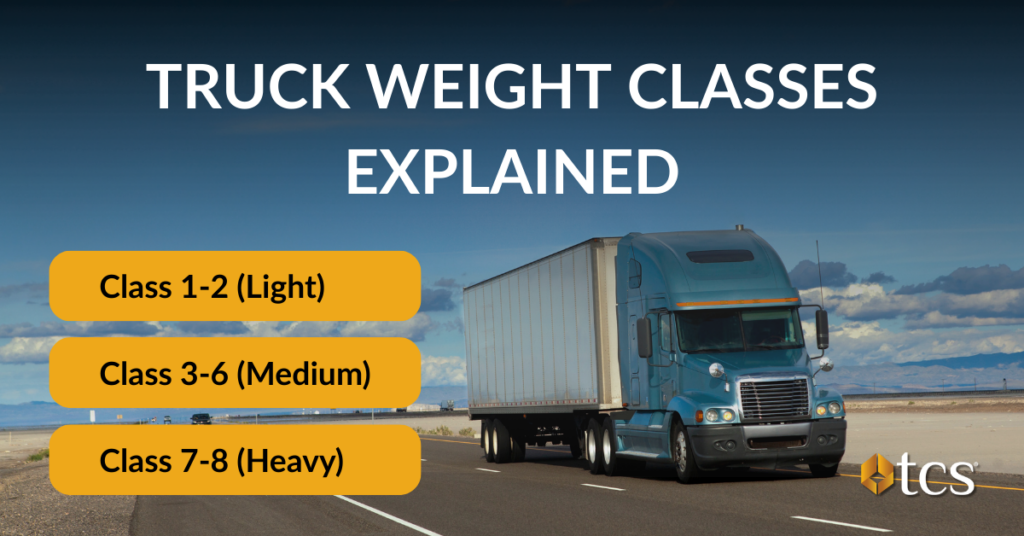
Light‑Duty Trucks (Classes 1–2): Pickups, SUVs, and small work trucks used in construction, maintenance, and personal driving. Common weights are up to 10,000 pounds GVWR.
Medium‑Duty Trucks (Classes 3–6): Larger pickups, box trucks, utility trucks, and vocational trucks. The GVWR range is 10,001-26,000 pounds.
Heavy‑Duty Trucks (Classes 7–8): Tractors and semi-trucks, dump trucks, and refuse trucks. GVWR is 26,001 pounds or more.
Know your truck class? Start saving on fuel today.
Whether you operate a Class 3 work truck or a Class 8 semi, fuel is one of your largest operating expenses. The TCS Fuel Card helps trucking companies and owner-operators save money at thousands of fuel locations nationwide, with no transaction fees and exclusive discounts designed for businesses that depend on the road.
Sign up for your TCS Fuel Card now or fill out this form to get more information!
What Are the Federal Weight Limits for Trucks on U.S. Interstates?
Whether you run local or long haul, these federal numbers matter. On the Interstate System, federal limits are 20,000 pounds on a single axle, 34,000 pounds on a tandem axle, and 80,000 pounds maximum gross vehicle weight.
While GVWR defines a truck’s class and overall capacity, federal rules on the Interstate System focus on how that weight is distributed across axles to protect roads and bridges. The FHWA uses the Bridge Formula to determine how weight should be spaced across axles. If you’re hauling a standard tractor‑trailer, that 80,000‑pound limit is the key number to watch.
Why Do Weight Limits Vary by State?
While federal limits apply to the Interstate System, things can change once you exit and hit state highways or local roads. States can set their own weight limits on non‑interstate roads. Some states allow heavier loads with permits. Seasonal restrictions, bridge postings, or regional regulations can affect what you’re allowed to haul. This is why route planning matters, since the rules in Utah might not match the rules in Louisiana.
What Happens at a Truck Weigh Station?
Weigh stations keep roads safe and make sure everyone follows the same rules. When you roll in, inspectors may check your truck’s axle weight, your gross vehicle weight, your CDL and paperwork, your logbook or ELD, and your safety and compliance status.
If everything checks out, you’re back on the road quickly. If not, you may be asked to adjust your load or address compliance issues.
Why Should Truckers Care About Their Vehicle’s Weight Class?
Knowing your truck’s weight class matters. Here’s why:


CDL Requirements – Class 7 and 8 trucks typically require a CDL. Medium‑duty trucks might, depending on GVWR and what you’re hauling.
Registration and Insurance – Your weight class affects registration fees, insurance premiums, and permits. Heavier trucks often cost more to insure and register.
Route Planning and Compliance – The right routes help you avoid restricted bridges, stay under state weight limits, and skip costly tickets or delays.
Avoiding Fines and Downtime – Overweight citations can be expensive, and downtime quickly affects revenue. Understanding the weight classes and complying with them helps you stay compliant and avoid disruptions that cost money.
How Do Weight Classes Impact Fuel Planning and Costs?
The heavier the truck, the more fuel it burns. That means it affects fuel usage, since extra weight requires more engine power and more diesel per mile. So, controlling your fuel costs is super important. Fuel cards for truck drivers, such as industry leader TCS Fuel Card, unlock access to fuel discounts, fuel spending tracking, and secure purchase management. The results? Meaningful savings at the pump.
Knowing your average operating weight helps you plan fuel stops, manage fuel expenses, and choose the most efficient routes.
How Can a Fuel Card Put Money in Your Pocket?
Fuel cards, from owner-operator fuel cards to fleet fuel cards, can offer huge savings because fuel prices vary by state. Smart planning can save money on every run, especially with the TCS Fuel Card, which saves clients an average of 49¢ per gallon* at more than 2,300 in-network fuel discount locations across the country.
No matter your truck class or how much weight you’re hauling, fuel is a major daily expense. The TCS Fuel Card helps owner‑operators, fleets, and company drivers save real money at the pump every day. Are you ready for huge savings with the TCS Fuel Card? Apply today and put cash in your wallet.
*Average savings of 49 cents per gallon is based on actual in-network TCS client transactions from Q1-Q3 2026. Due to fuel price volatility, year-to-date average discounts are shown to provide the most representative view of client savings.