For truckers, International Fuel Tax Agreement (IFTA) reports are required four times a year. IFTA applies to qualified motor vehicles over 26,000 pounds that travel across state lines. It allows carriers to file a single quarterly fuel tax report instead of separate reports for each state. There are no shortcuts: If you haul loads from state to state, you file IFTA reports.
What Is IFTA?
IFTA is an agreement between the lower 48 states and 10 Canadian provinces that simplifies fuel tax collection and reporting for interstate commercial carriers. Instead of filing separate fuel tax reports with each state or province you travel through, IFTA allows you to submit one consolidated quarterly return through your base jurisdiction.
This system uses the miles you drive in each jurisdiction and the fuel you purchase to calculate taxes owed. It then distributes those taxes fairly among the states or provinces. By standardizing the process, IFTA reduces paperwork, improves accuracy, and makes it easier for carriers to stay compliant while operating across multiple regions.
IFTA reporting applies to multiple fuel types, including diesel, gasoline, and alternative fuels used by qualified vehicles.
What Records Should I Keep to File IFTA Fuel Taxes?
The Federal Motor Carrier Safety Administration (FMCSA) requires you to keep the following records for at least four years:
- Fuel Receipts: Keep receipts of all fuel you purchase showing fuel type, purchase date, purchase location, price per gallon, vehicle registration number, total purchase amount, and number of gallons purchased.
- Mileage Records: Track the mileage traveled in each jurisdiction for each quarter, specifying total mileage, total mileage for each trip, and the total mileage traveled in each jurisdiction.
- Trip Reports: Be sure to include all relevant trip information, such as beginning and ending trip dates, trip origin and destination, and travel routes.
When Are IFTA Taxes Due in 2026?
IFTA reports are due on the last day of the month after each quarter. If that day is a weekend or a holiday, then reports are due on the next business day. Plan early for all the 2026 IFTA reports by always keeping an IFTA fuel tax schedule for the year handy. Here are the IFTA filing due dates for 2026:
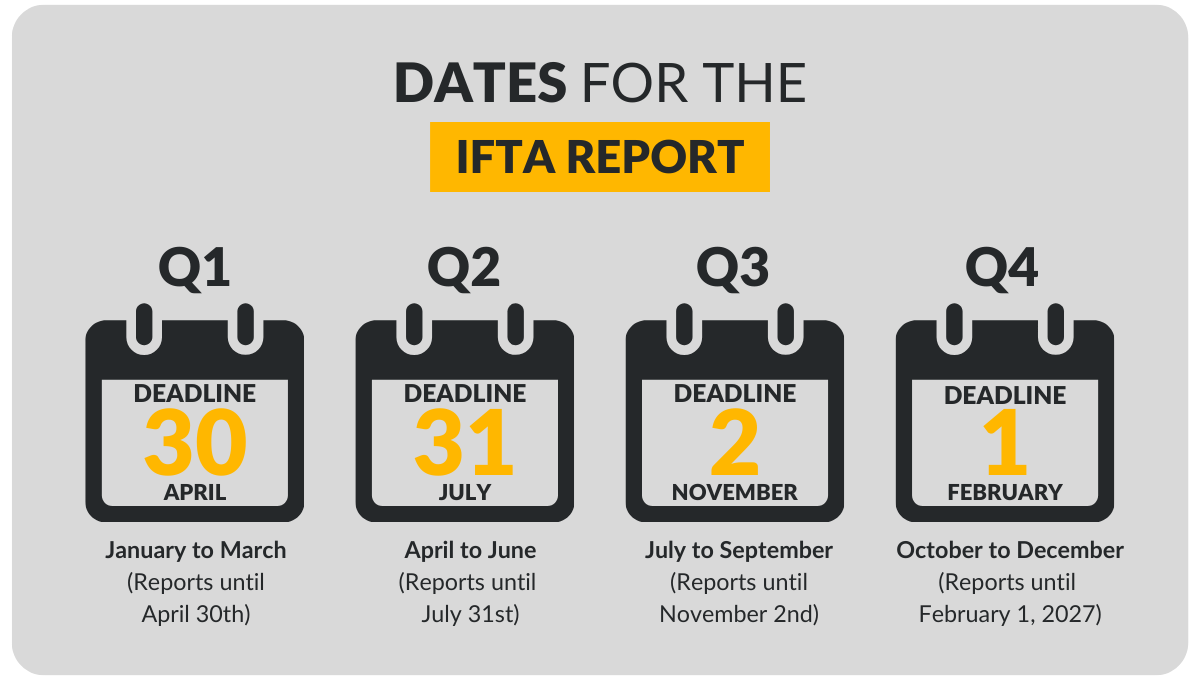
Each IFTA return must include total miles traveled and fuel purchased in every jurisdiction for the quarter, covering all activity by qualified vehicles during that period. Even one mile driven outside your base state requires an IFTA filing, and carriers must submit a return even if they did not operate in certain states or did not purchase fuel. If a filing deadline falls on a weekend or holiday, it moves to the next business day.
What Happens if You Miss an IFTA Deadline?
Missing an IFTA deadline can result in penalties, interest charges, and additional compliance issues that can impact your operation. In most cases, the penalty is $50 or 10 percent of the total tax due, whichever is greater, and interest may continue to accrue until the balance is paid.
Late or missed filings can also trigger closer review of your account and increase the likelihood of an audit. Repeated violations may lead to suspension of your IFTA license, which can prevent you from operating across state lines legally.
Filing on time each quarter and keeping accurate records helps you avoid unnecessary costs and keeps your business running without interruptions.
IFTA Filing Requirements
Carriers must file an IFTA return every quarter, regardless of activity. Report all miles traveled and fuel purchased for each jurisdiction. This includes tracking distance by state or province and documenting fuel purchases to ensure accurate tax distribution.
Even if you did not purchase fuel or drive miles in certain areas, you must still submit a return to remain compliant. All reported information should be supported by clear, organized records for each qualified vehicle. Depending on your activity, you may either owe fuel taxes or be eligible for a refund when you file your quarterly return.
Returns can typically be filed electronically through your base jurisdiction, which is the state or province where your business is registered. Some states may require electronic payment of any taxes owed. Staying consistent with your reporting process helps reduce errors, avoid penalties, and keep your operation in good standing.
IFTA Recordkeeping
Carriers are required to keep detailed and accurate records to support every IFTA filing. This includes mileage logs for each qualified vehicle, showing distance traveled in every state or province, as well as receipts and documentation for all fuel purchases.
Records should clearly show dates, trip origins and destinations, routes taken, and total miles driven. They should also include fuel type, gallons purchased, and purchase locations. Keeping this information organized throughout the quarter makes filing easier and helps prevent errors.
All IFTA records must be retained for at least four years and should be readily available in the event of an audit. Incomplete or missing records can lead to penalties or estimated tax assessments, so maintaining accurate documentation is essential for staying compliant.
How Do I File IFTA Tax Reports?
To calculate fuel tax for each state or jurisdiction, you’ll need the applicable fuel tax rates. The International Fuel Tax Association publishes fuel tax rates by quarter and jurisdiction. Keep in mind that your taxable miles for IFTA are usually the same as the total miles driven in each state or jurisdiction. Take note, though, that certain jurisdictions do allow mileage exceptions that don’t count as taxable.
Most carriers file directly through their base jurisdiction’s online portal or approved electronic filing systems. You can file your IFTA quarterly reports online through various approved electronic services, such as Webfile, ExpressTruckTax, or EDI software.
IFTA audits can occur, so maintaining clean and accurate records is essential to avoid issues during review.
TCS Fuel Card Makes IFTA Filing Easier
At TCS, we understand that keeping up with the necessary paperwork to file IFTA reports can be difficult for busy truckers delivering goods. The TCS Fuel Card helps simplify IFTA reporting by tracking fuel purchases by state and providing clear, organized data that supports accurate quarterly filings.
All TCS Fuel Card clients have easy access to fuel receipts, mileage records, and trip reports, which are essential for completing IFTA reports correctly. In fact, clients automatically receive a quarterly summary detailing any transaction involving diesel, reefer fuel, or biodiesel. TCS totals the number of transactions, gallons, and costs, then groups them by state, giving you exactly what you need to meet 2026 IFTA deadlines.
If you need your report sooner, you can log into the TCS Fuel client site at any time to access your data. With better visibility into your fuel activity, you can spend less time gathering information and more time focused on running your business.
The TCS Fuel Card makes IFTA filing an easier process. Are you ready to save money at the pump and simplify IFTA reporting? Apply for the TCS Fuel Card today. Call us at 844-827-7705 or sign up today!