Picture on-time deliveries, smooth-running trucks, and steady profits. Without regular care, small issues can and do lead to expensive breakdowns. As a result, preventive maintenance becomes essential for keeping costs under control. Preventive maintenance is your fleet’s checkup. Catching problems early and preventing costly surprises.
In this post, we will go over how fleet maintenance saves money, reduces downtime, and boosts efficiency for small to mid-sized trucking firms.
How Preventive Maintenance Saves Money
The real payoff of preventive maintenance is clear savings. Fleets that have preventive maintenance programs often see lower overall maintenance costs. Catching problems early avoids expensive downtime, so acting before issues grow makes a big difference.
Regular truck preventive maintenance stops small problems from becoming major repairs. Emergency fixes typically involve towing, rushed orders for parts, and lost revenue from idle trucks, while scheduled semi-truck service keeps minor issues from escalating.
To illustrate the difference, here’s a quick comparison:
| Reactive Maintenance | Preventive Maintenance | |
|---|---|---|
| Cost per Repair | High (3–9× more) | Low |
| Downtime | Extended | Minimal |
| Vehicle Life | Shorter | Longer |
| Fuel Efficiency | Decreased | Improved |
| Safety Risks | Higher | Lower |
Switching to fleet preventive maintenance helps you avoid costly truck breakdowns that strand drivers and delay loads. Additionally, well-maintained trucks run more efficiently, with better fuel economy from regular checks on tires, engines, and fluids. With today’s fuel prices, these savings add up fast.
With preventative maintenance, safety and compliance also improve. A solid program includes truck inspection checklist items that meet DOT standards, lowering the risk of violations and fines. Ultimately, when you add fuel savings, the positive impact on your bottom line grows even stronger.
Building a Preventive Maintenance Program
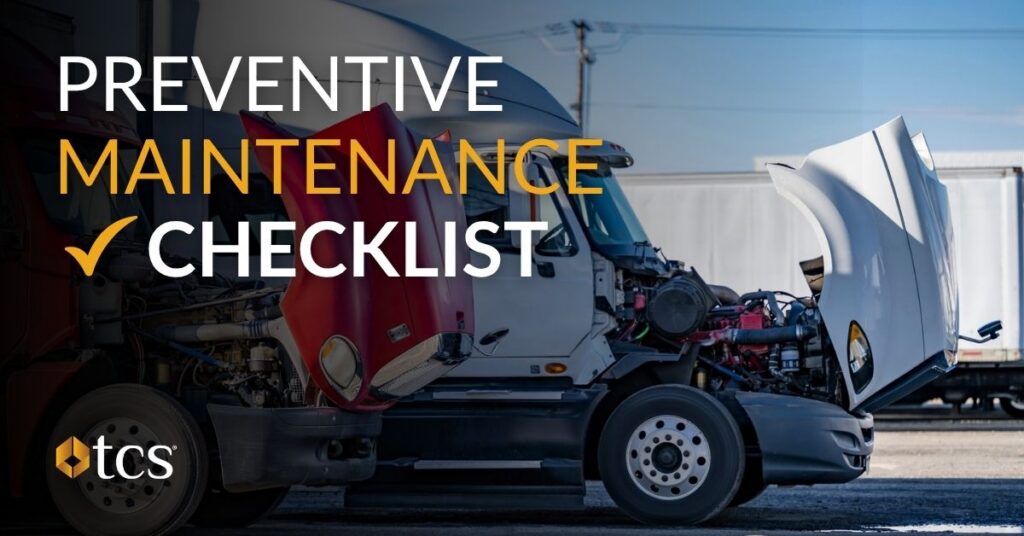
Setting up a preventive maintenance program is straightforward. Begin with a customized fleet maintenance checklist for your trucks. For semi-trucks, focus on regular brake checks, timely oil changes, and frequent tire inspections.
For example, here’s a sample maintenance checklist:

- ✓ Check engine oil and filters.
- ✓ Inspect brakes and pads.
- ✓ Rotate and balance tires.
- ✓ Examine fluids (coolant, transmission, differential).
- ✓ Test battery and electrical systems
- ✓ Check lights, signals, and wipers.
- ✓ Log all truck maintenance.
Next, set up mileage or time-based schedules for your semi-trucks. For diesel preventive maintenance, replace fuel filters regularly, for example. To stay organized, track tasks using fleet maintenance software or truck maintenance software. These tools send reminders, keep records, and can connect to telematics like ELDs for real-time monitoring to help cut downtime.
You can also train drivers to perform daily pre-trip checks with a truck inspection checklist. Finally, consider only doing business with trusted and reputable service centers for professional diesel truck pm service. This consistent approach delivers reliable fleet truck maintenance, lowers repair costs, and keeps trucks on the road longer.
Fuel Savings for Fleet Managers and Owner-Operators
The TCS Fuel Card can help you save an average of 57¢ per gallon* at over 2,300 in-network locations nationwide, with no transaction fees on fuel purchases at in-network stations. Cardholders can also access discounts on qualifying maintenance items, such as oil changes, additives, coolant, parts, repairs, and tires at TA Truck Service.
These perks fund preventive maintenance, free up cash for truck service, and lower fleet costs, all with no hidden fees.
Reduce fuel costs and keep trucks running strong. Get your free TCS Fuel Card for savings on fuel and great maintenance discounts at TA Truck Service. Sign up now and get your free TCS Fuel Card Today! Its fast, simple, and built for truckers like you.
*Average savings of 57 cents per gallon is based on actual in-network TCS client transaction for Q4 of 2025.