Diesel fuel prices can change every time you pull into a truck stop. One week, prices are down. The next week they’re climbing again. That matters for truckers and fleets. Fuel is one of the largest operating expenses in trucking, and even small price increases can affect profitability.
Drivers can’t control the market forces behind diesel fuel prices. But they can control where, when, and how they buy fuel. Understanding how diesel pricing works can help you make smarter fueling decisions, so you can save more money on every trip.
Why Diesel Fuel Costs Change So Often
The diesel fuel in your tanks starts as crude oil. After crude oil is extracted, it goes to a refinery where it’s processed into diesel fuel and other petroleum products. From there, the fuel moves through terminals, pipelines, and transportation networks before reaching truck stops and fuel stations.
Every step adds cost. Several factors influence diesel fuel prices, including:
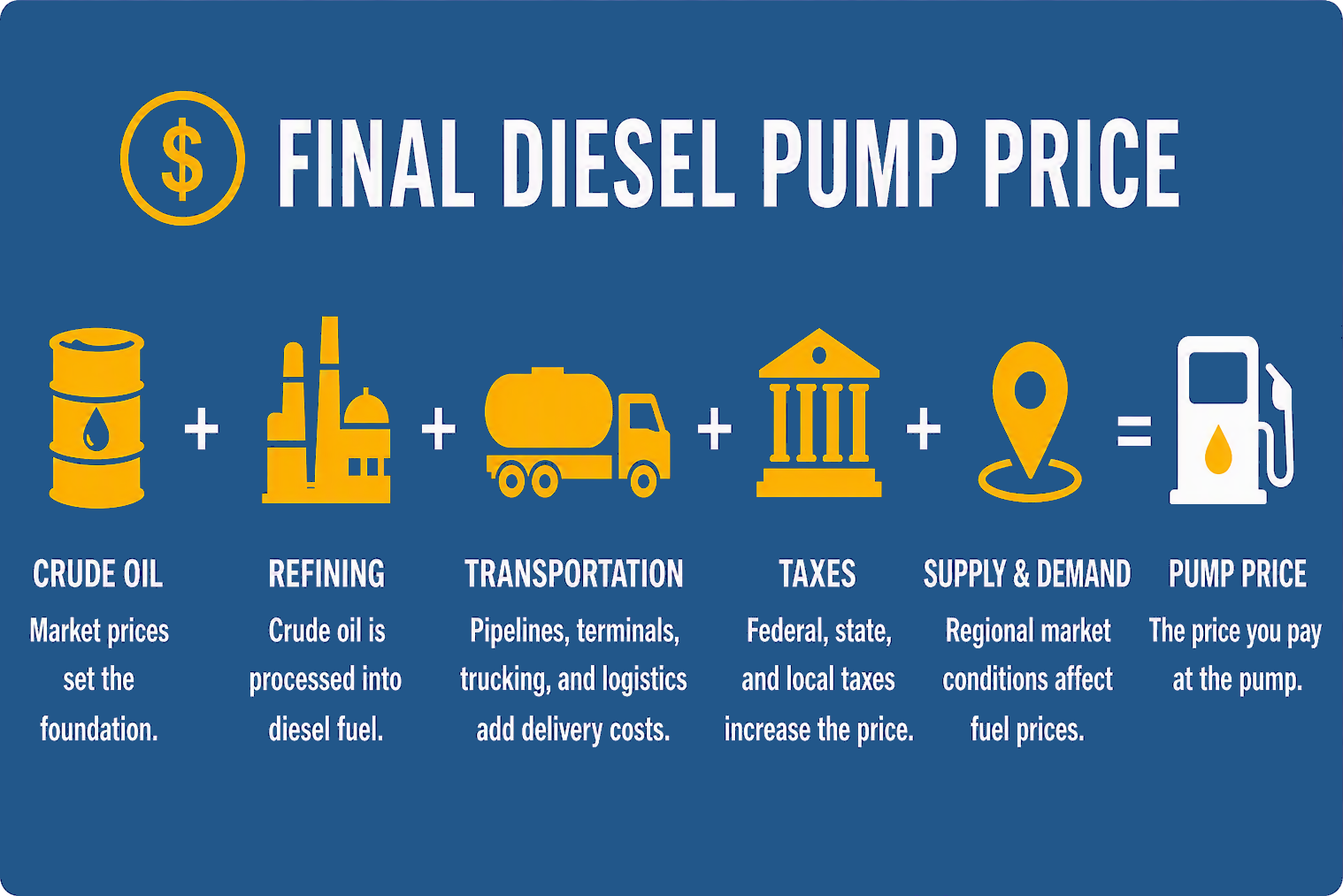
Because these factors are constantly changing, diesel fuel prices can rise or fall from one week to the next – or even from one region to another.
What Is a Rack Price?
To better understand fuel prices, it helps to know what a rack price is. Think of the rack price as the wholesale cost of fuel. It’s the price retailers pay when purchasing fuel from a terminal before it’s delivered to their location.
Many truck stops and fuel retailers use pricing data from OPIS (Oil Price Information Service), an industry source that tracks fuel prices across the country.
Once a truck stop purchases fuel, it adds transportation and freight costs, operating expenses, taxes, and retail markup. The result is the final pump price that drivers see when fueling.
What Causes Diesel Prices to Rise or Fall?
Many factors can affect diesel fuel prices, and most are outside a driver’s control.
Some of the most common factors include:
Regional Market Conditions: Fuel prices often vary by state, city, and region based on local supply and demand.
Refinery Outages: When refineries experience maintenance issues or unexpected shutdowns, fuel production can decrease, and prices may rise.
Severe Weather: Hurricanes, winter storms, and other weather events can disrupt fuel production and distribution networks.
Global Events: International conflicts, economic changes, and shifts in crude oil production can affect fuel markets worldwide.
Supply Chain Disruptions: Transportation delays, pipeline issues, and labor shortages can increase fuel delivery costs.
Tax Changes: Changes in federal, state, or local fuel taxes can directly impact diesel fuel costs.
Focus on What You Can Control
Truckers can’t control these market forces, but they can control how they buy fuel and negotiate fuel surcharges to help reduce diesel expenses. So, instead of worrying about what the market will do next, focus on strategies that help reduce fuel expenses.
These strategies include:
- Comparing fuel prices before stopping
- Planning fuel stops strategically
- Taking advantage of fuel discounts
- Using tools that best identify the best fueling options
Remember that the more informed your fueling decisions are, the more opportunities you have to lower your operating costs.

Use the TCS Fuel Finder to Locate Better Fuel Prices
You don’t need to guess when it comes to finding lower-priced diesel fuel. The TCS Fuel Finder, the interactive map connected to the TCS Fuel Card, gives you access to real-time pricing information, fuel discount visibility, route planning support, and truck stop amenities and location details.
The TCS Fuel Card has a network of 2,300+ fuel discount partners across the country and is also accepted at more than 12,000 truck stops in the United States. That means owner-operators, small-to-medium sized trucking companies, and larger fleets can quickly compare options and find better fuel prices along their routes. Instead of fueling at the closest stop, you can maximize savings by making better decisions based on actual pricing and available discounts.
How the TCS Fuel Card Helps Truckers Save
A fuel card can be one of the most effective tools for managing fuel costs. For more than 10 years, the TCS Fuel Card has leveled the playing field between owner-operators, small fleets, and large carriers by reducing diesel fuel cost through market-based discounts and a large fueling network.
The TCS Fuel Card benefits include:
-
-
 Average savings of 59¢* per gallon
- Never paying more than the cash price
-
- No fuel transaction fees at in-network locations
- No sign-up, monthly, or annual fees
- Flexible funding options with 24/7 access
-
Those savings can add up quickly. For example, a truck purchasing 150 gallons of fuel could save about $88.50 on a single fill-up based on average customer savings. Over time, those savings can help offset one of the largest costs in trucking.
Start Saving on Fuel Today
Diesel fuel prices will always be unpredictable. Crude oil markets, refining costs, weather events, and regional conditions are constantly changing. While carriers can’t control those factors, they can control how they fuel. Using tools like the TCS Fuel Finder and the TCS Fuel Card can help you find lower fuel prices, access meaningful discounts, and improve overall fleet fuel management.
Ready to lower your diesel fuel cost? Our TCS Fuel Card client services experts can show you how much you can save on your next fill-up. Don’t wait, apply for the TCS Fuel Card today!
*Average savings of 59 cents per gallon is based on actual in-network TCS client transaction for Q2 of 2026.