Fuel costs are one of the biggest variables in trucking and can be the hardest to predict. Diesel prices can rise quickly, cutting into your margins and making planning harder. Owner-operators, trucking companies, and freight brokers all use fuel surcharges to help manage costs.
A fuel surcharge helps offset rising diesel costs but understanding how it works is key to staying profitable. Protecting your revenue without forcing you to renegotiate every load.
What Is a Fuel Surcharge in Trucking?
A fuel surcharge is an extra fee added to a freight rate to account for changes in diesel prices. It is separate from the base rate and adjusts based on fuel costs. When diesel prices go up, the surcharge increases. When prices drop, it decreases.
Think of it as a built-in adjustment that helps cover fuel price changes without renegotiating the full rate. You might also hear a fuel surcharge called FSC in trucking, surcharge for fuel, or a fuel surcharge fee.
No matter the name, the fuel surcharge meaning stays the same — it’s designed to help carriers recover fluctuating fuel costs.
How to Calculate a Fuel Surcharge
Fuel surcharges help carriers offset rising diesel costs. While the formula looks complicated at first, it can be calculated in four simple steps.
Remember that rates can vary based on your agreement, but the formula stays consistent. If you’re running different equipment, your numbers may change depending on the MPG of your semi.
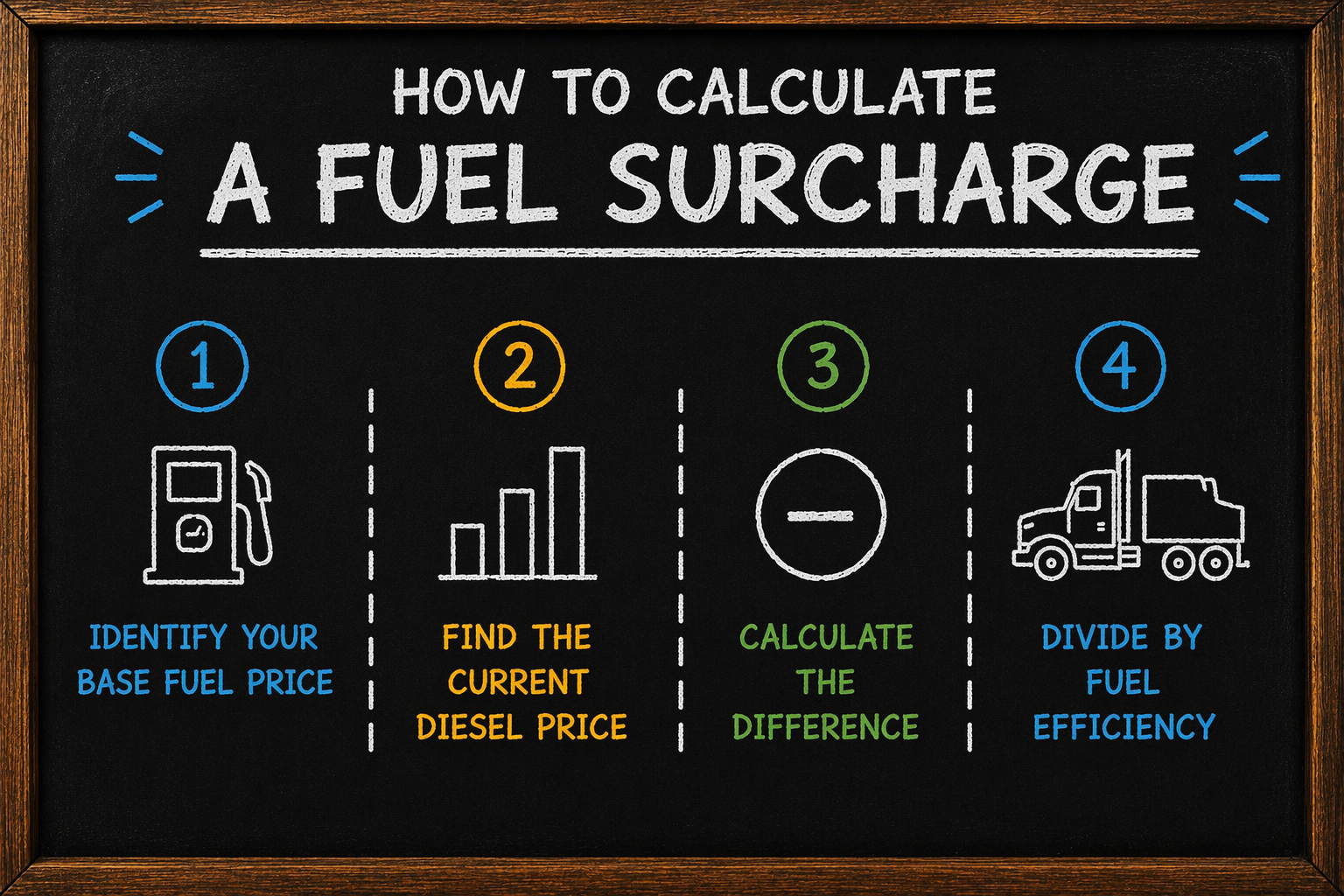
You can reference national averages or regional pricing. For the example below, we used $4.00 per gallon.
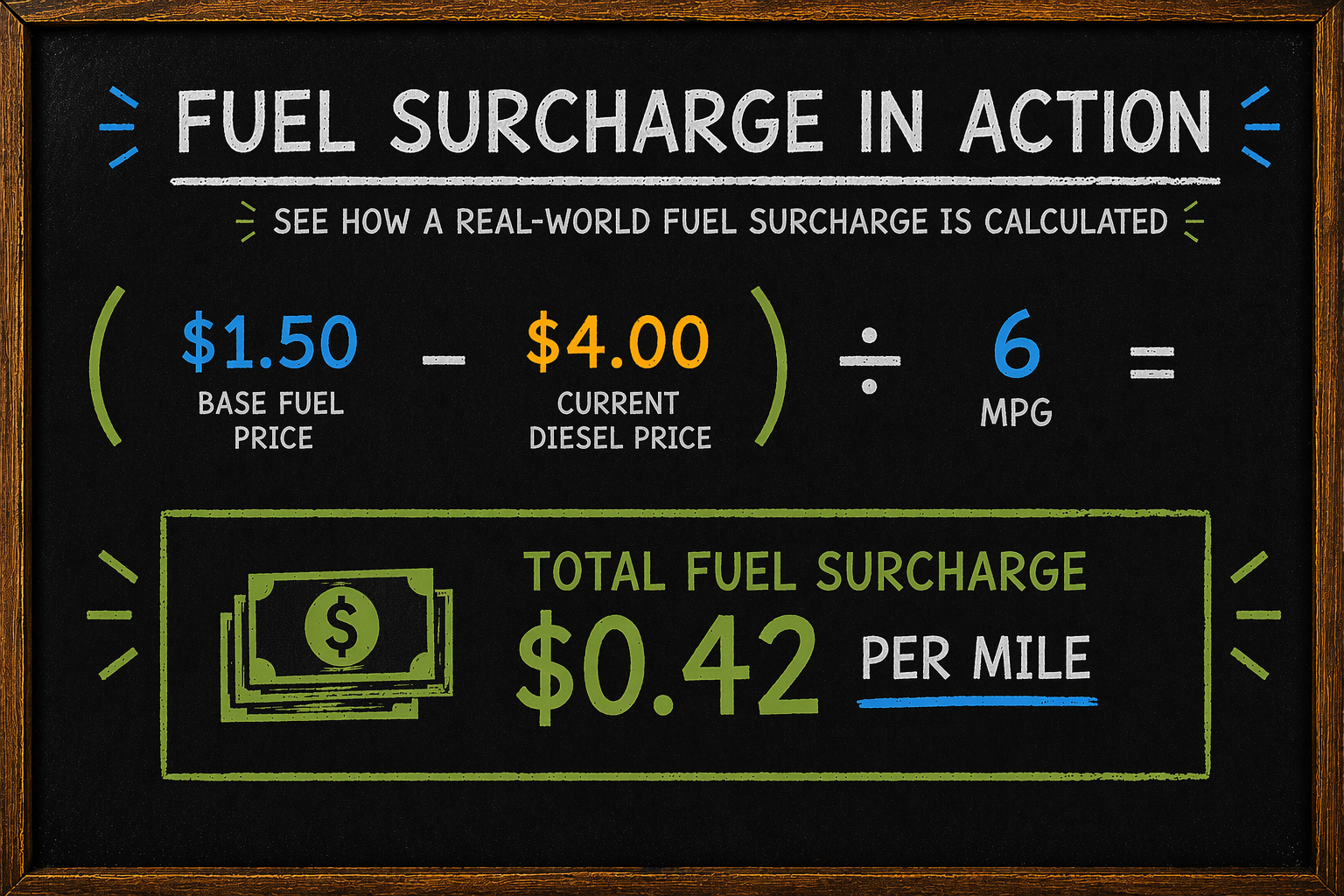
Starting with a base fuel price of $1.50 per gallon, we subtract it from the current diesel price of $4.00 per gallon to get a difference of $2.50. We then divide that amount by a fuel efficiency of 6 MPG, resulting in a fuel surcharge of $0.42 per mile.
Knowing how many miles per gallon your truck gets is key to accurate calculations.
Many carriers also use a fuel calculator to streamline this process and adjust rates quickly.
Not Sure What Fuel Surcharge to Charge?
Fuel prices can change quickly, and charging the right fuel surcharge helps protect your bottom line.
Use our free Fuel Surcharge Calculator to estimate the additional amount per mile needed to offset higher fuel costs. Just enter your baseline fuel price, average MPG, and current fuel price to get an instant calculation.
 Fast and easy to use
Helps account for fluctuating diesel prices
Ideal for Owner-Operators and small fleets
Start with today’s fuel price, then use the Fuel Surcharge Calculator to explore higher and lower diesel costs. You may be surprised how quickly fuel price changes can affect the surcharge needed to help recover expenses.
Fuel Surcharge Calculator
Enter your fuel details to calculate the surcharge per mile.
Fuel Surcharge Per Mile
$0.00
This calculator provides an estimate only. Actual surcharge rates may vary based on carrier agreements.
Who Pays the Fuel Surcharge?
The fuel surcharge typically follows a simple flow: Shipper → Carrier → Driver. That means the shipper pays for the fuel surcharge. The freight broker includes it in the rate. The trucking company receives it as part of the compensation for the load, who then decides to pass it down to the driver or owner-operator depending on who pays for fuel.
In many cases, the fuel surcharge is separate from freight broker pay, making it easier to track and adjust based on fuel prices alone.
Take Control of Your Trucking Business
Fuel surcharges help offset costs, but they don’t eliminate them. That’s why controlling how much you spend on fuel matters just as much as how you calculate it.
If you use the right strategy, you can combine a well-structured fuel surcharge, smart fuel purchasing decisions, and consistent fuel savings. That’s where the TCS Fuel Card really makes a difference.
The TCS Fuel Card offers you an average of 59¢ cent discount per gallon of diesel at more than 2,300 in-network locations across the country. You pay $0 fuel transaction fees at in-network locations, as well as $0 activation, membership, monthly, or annual fees. You can manage your account on the go with the TCS Mobile App or use the TCS client website. You can use the TCS Fuel Finder to locate the best savings along your route. Also, you get itemized fuel statements for your IFTA reporting.
The bottom line is this: When you lower your cost per gallon, every mile becomes more profitable. When you combine those savings with a properly calculated surcharge fuel rate, you create stronger, more predictable cash flow.
Are you ready to take control of your fuel costs and your profits? Fuel surcharges can help protect your rates, but real savings happen at the pump. The TCS Fuel Card can lower your fuel costs, improve cash flow, and keep more of what you earn on every load.
*Average savings of 59 cents per gallon is based on actual in-network TCS client transaction for Q2 of 2026.